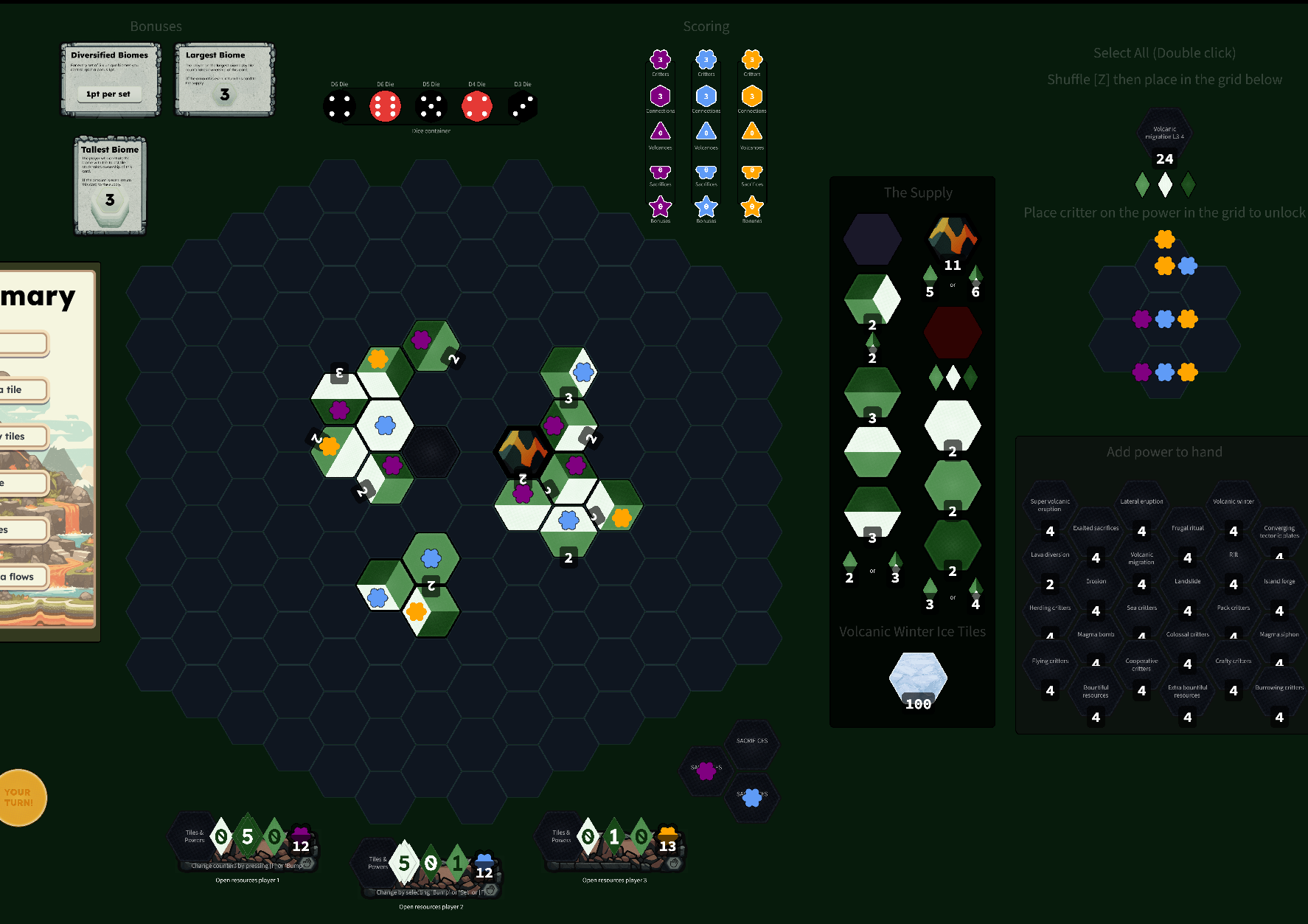
Faster! Faster!

How fast is too fast?

Deciding to change a core starting mechanic of the game can completely change the playstyle and feel.

There are two components that I’m currently tackling are starting islands and opener turns.

As I personally have played the game hundreds of times in all its various iterations, the first two turns have always felt quite repetitive, sometimes the first 3 if players aren’t optimising for an early volcano.

The game inevitably shifts at the point the first volcano is triggered, suddenly, the board begins to expand outward, not just up. Generally in that round, up to 3 volcanoes can be triggered in a 4 player game, completely changing the landscape. It opens the first important decisions of whether to also set off a volcano, gain a point, gain a power, and gain a critter, or whether to play more passive or defensively and capitalise on the volcanic soil tiles.

In an ‘optimal’ rush play, any player going second to fourth can afford a volcano on their 2nd turn. This seems fair.

A rush game

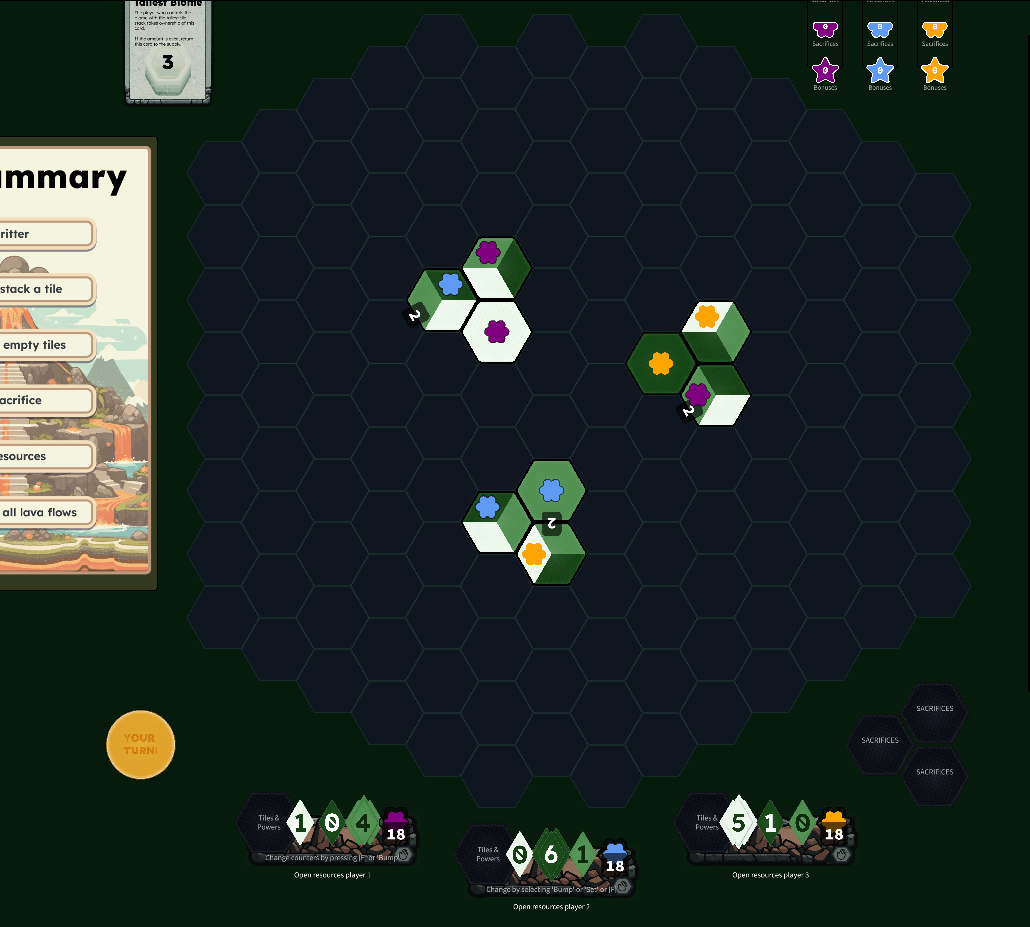
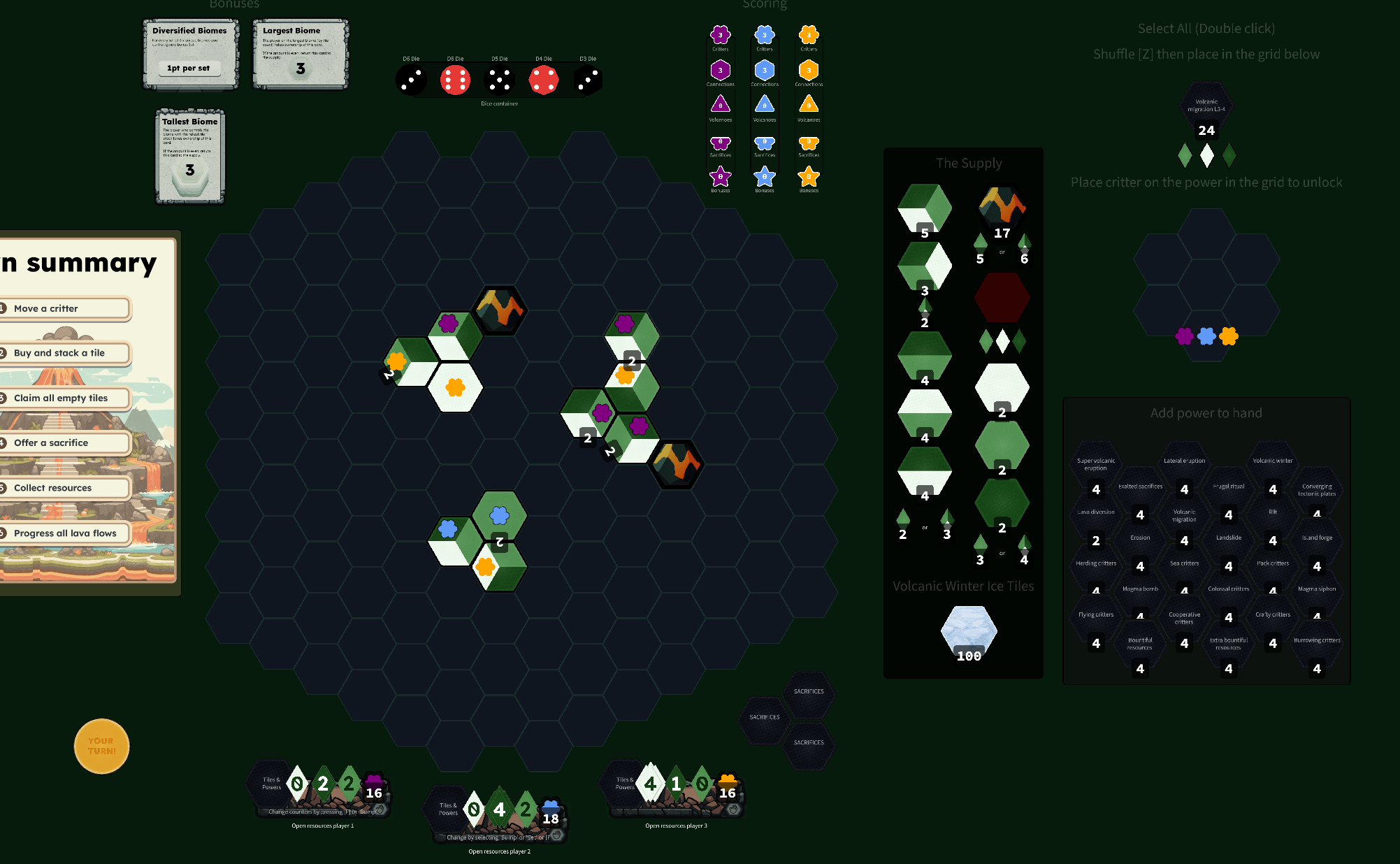
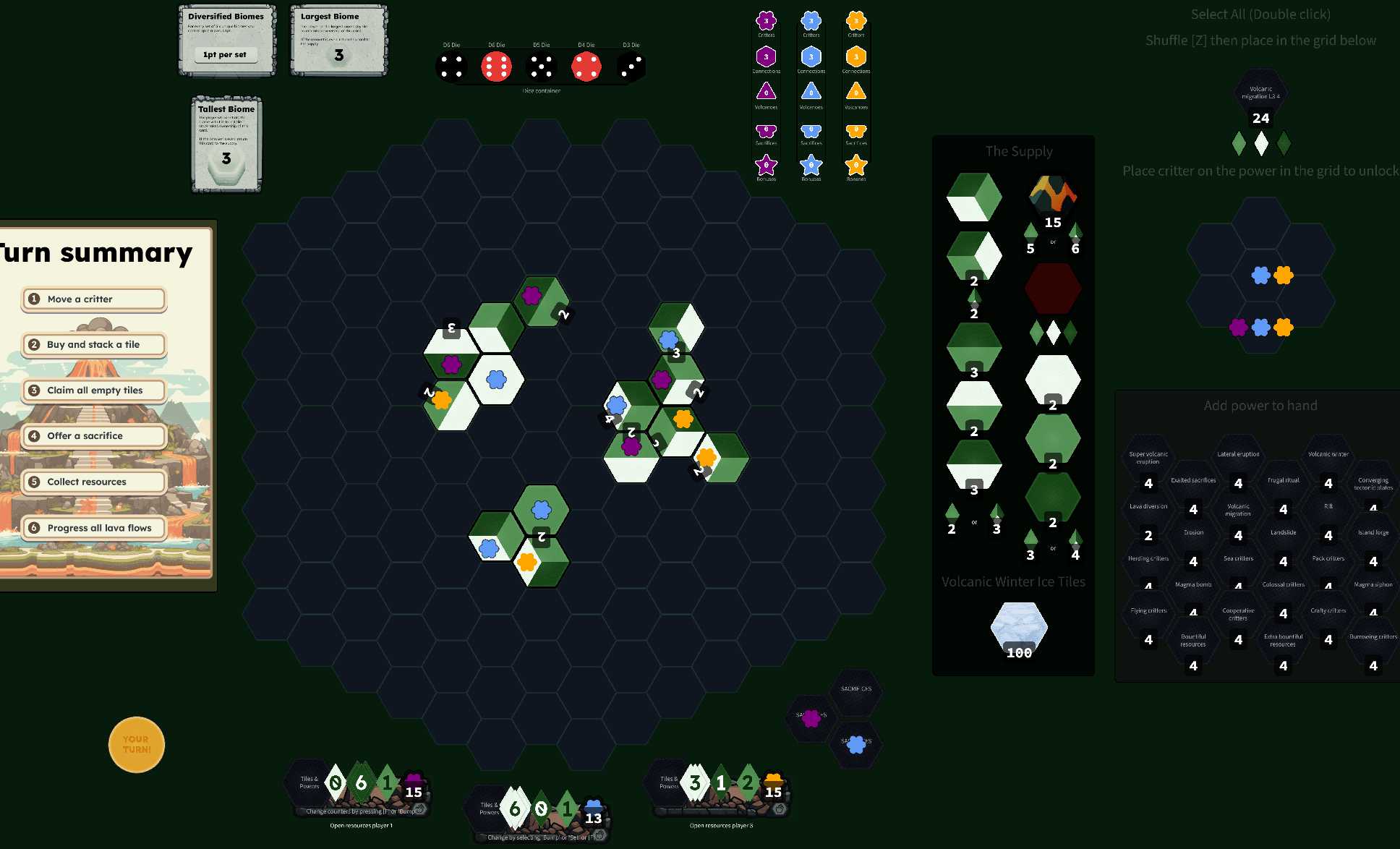
Start Round 1
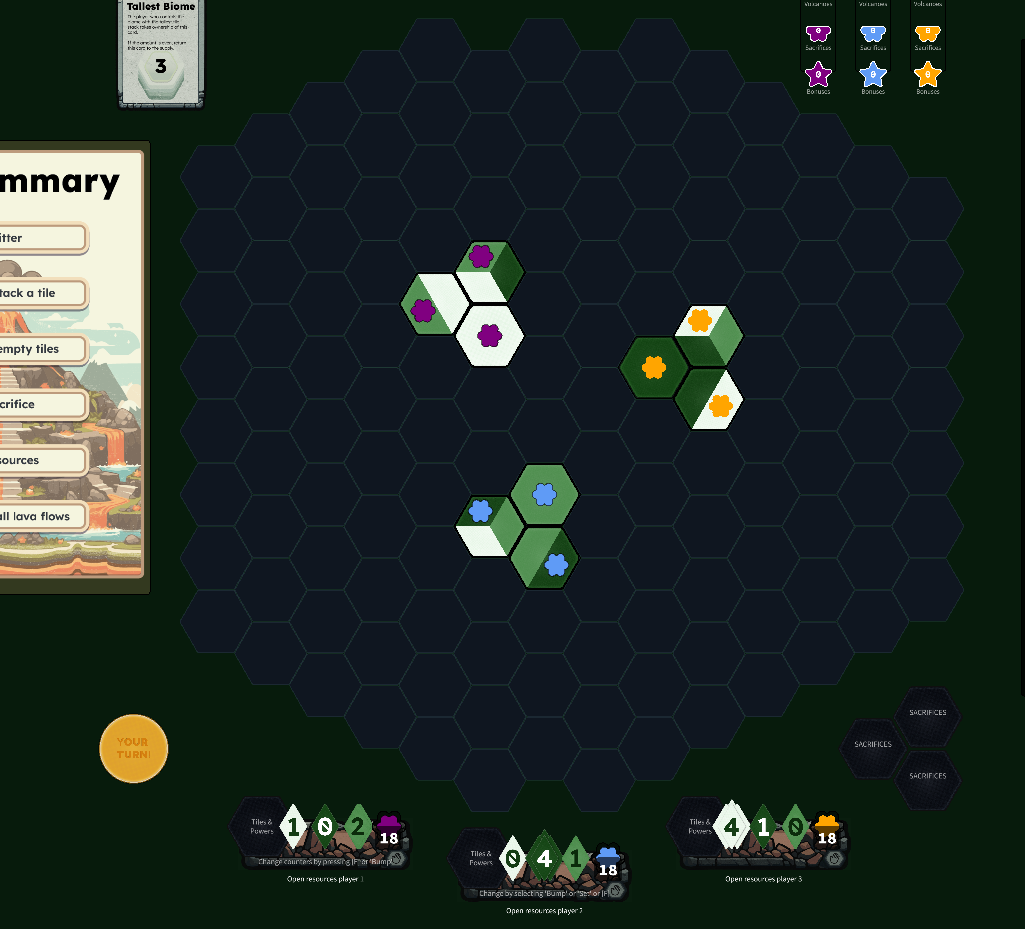
All players going for the ‘rush’, Player 2 and 3 get the 2 bonus resources

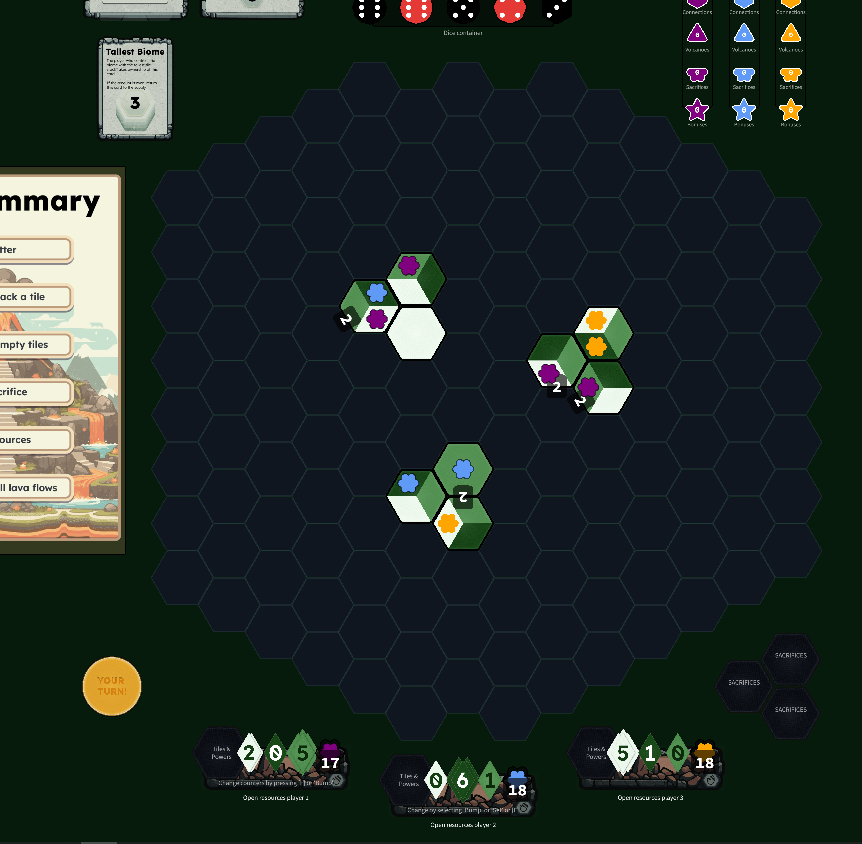
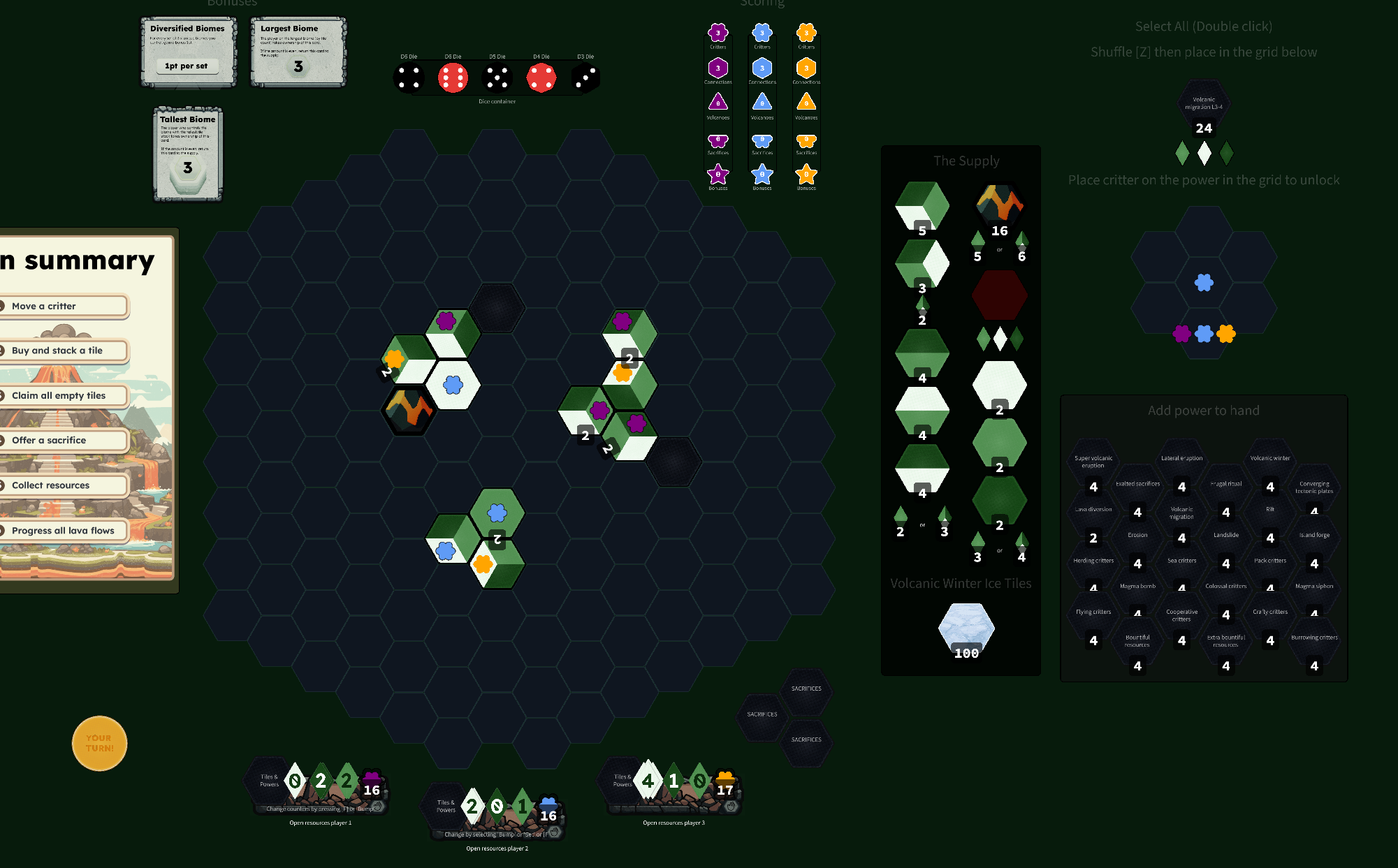
Start Round 2

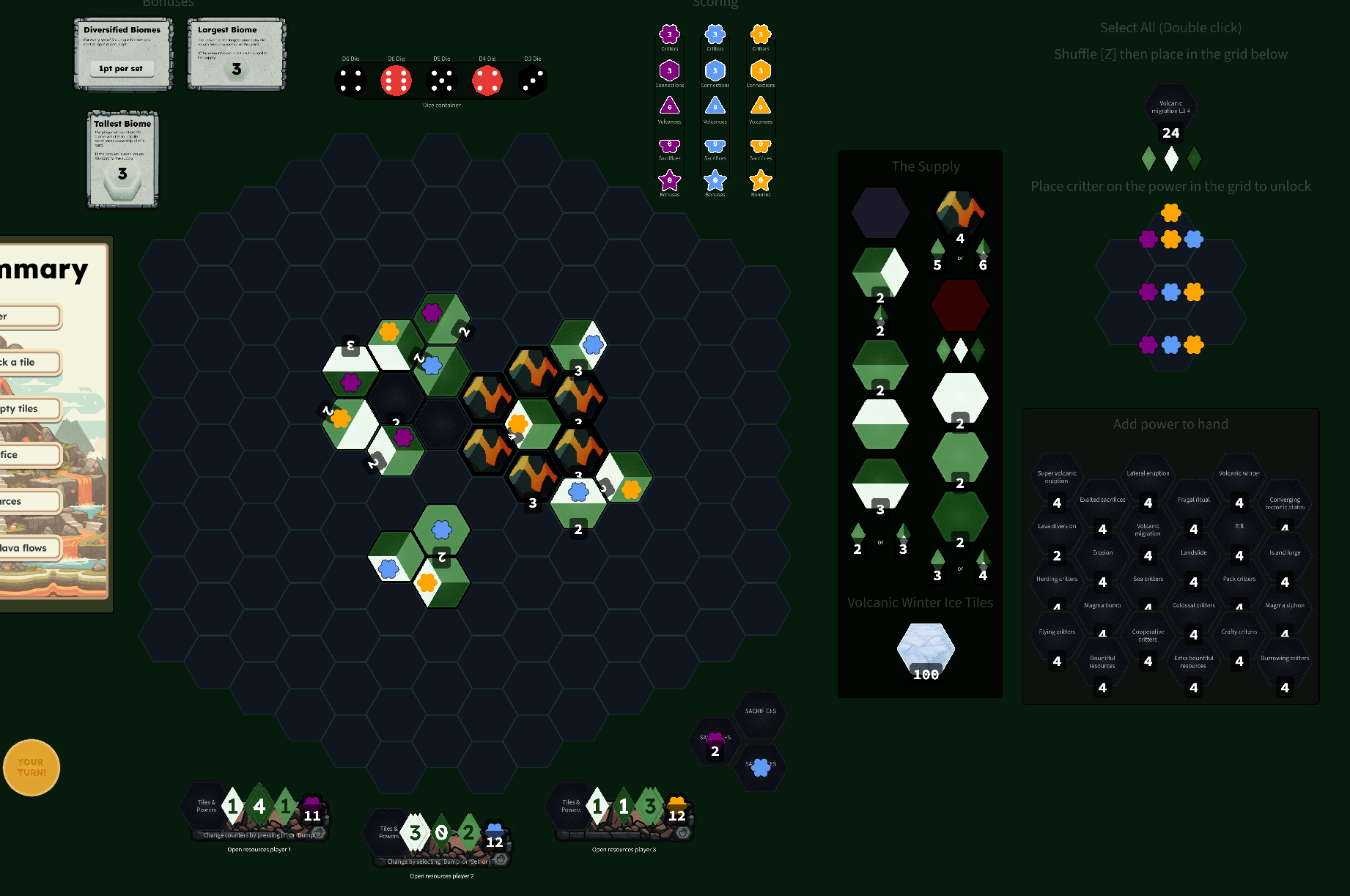
Everyone buys the cheapest tile that maximises one colour, player 2 has a distinct advantage as in this scenario, player 1 played onto player 3’s island.

Player 1 (purple) decides to hold onto their 4th critter, making them the target of Blue, but also prepping resources for a duo + volcano turn

Player 2 (blue) Plays their volcano, lands the most devastating of hits to Orange wiping out 3 critters total

This is another example of favour for having diversified islands to start.
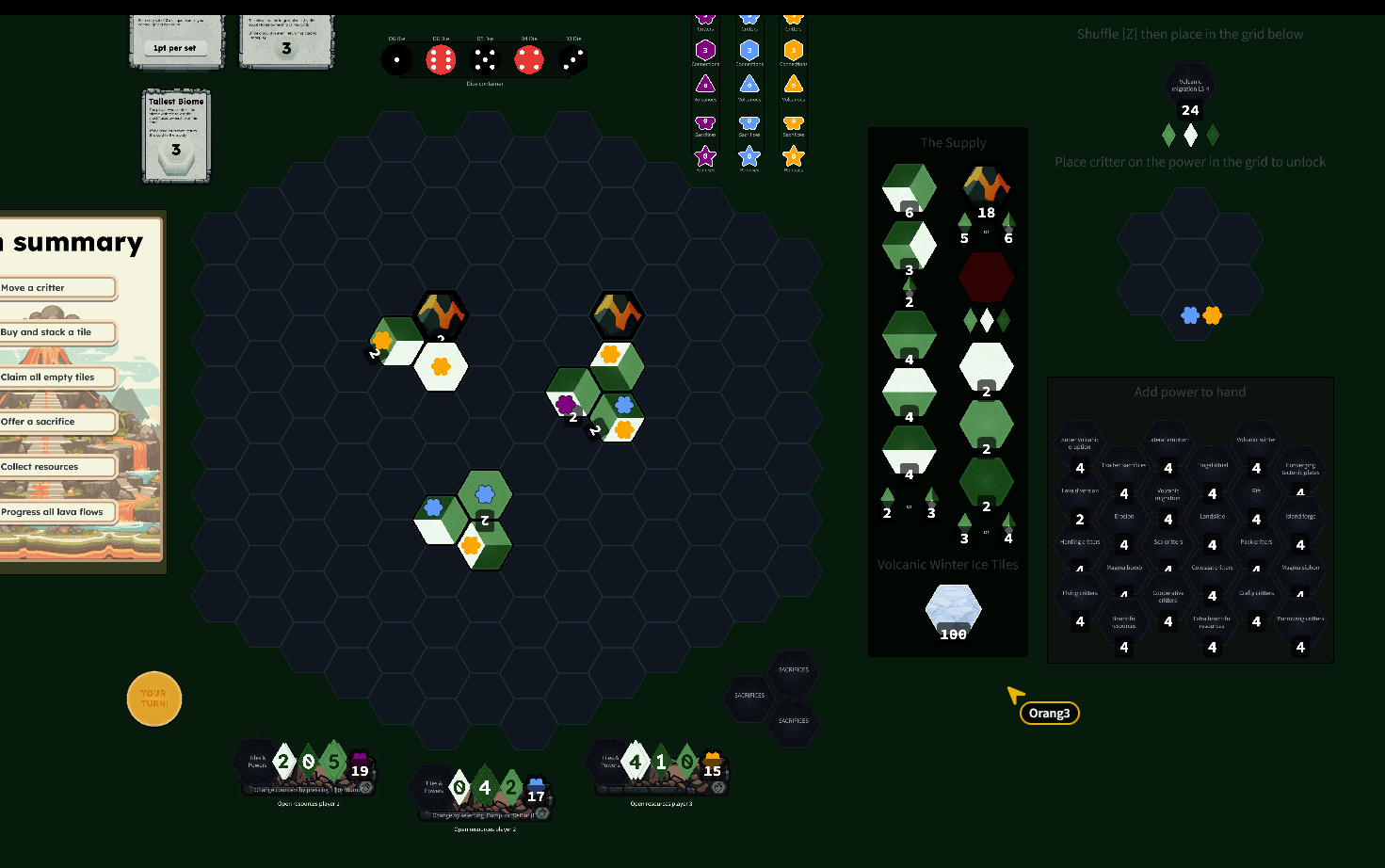
Player 3 (orange) play their volcano, also landing the most devastating hit, and managing to reclaim all their lost environment

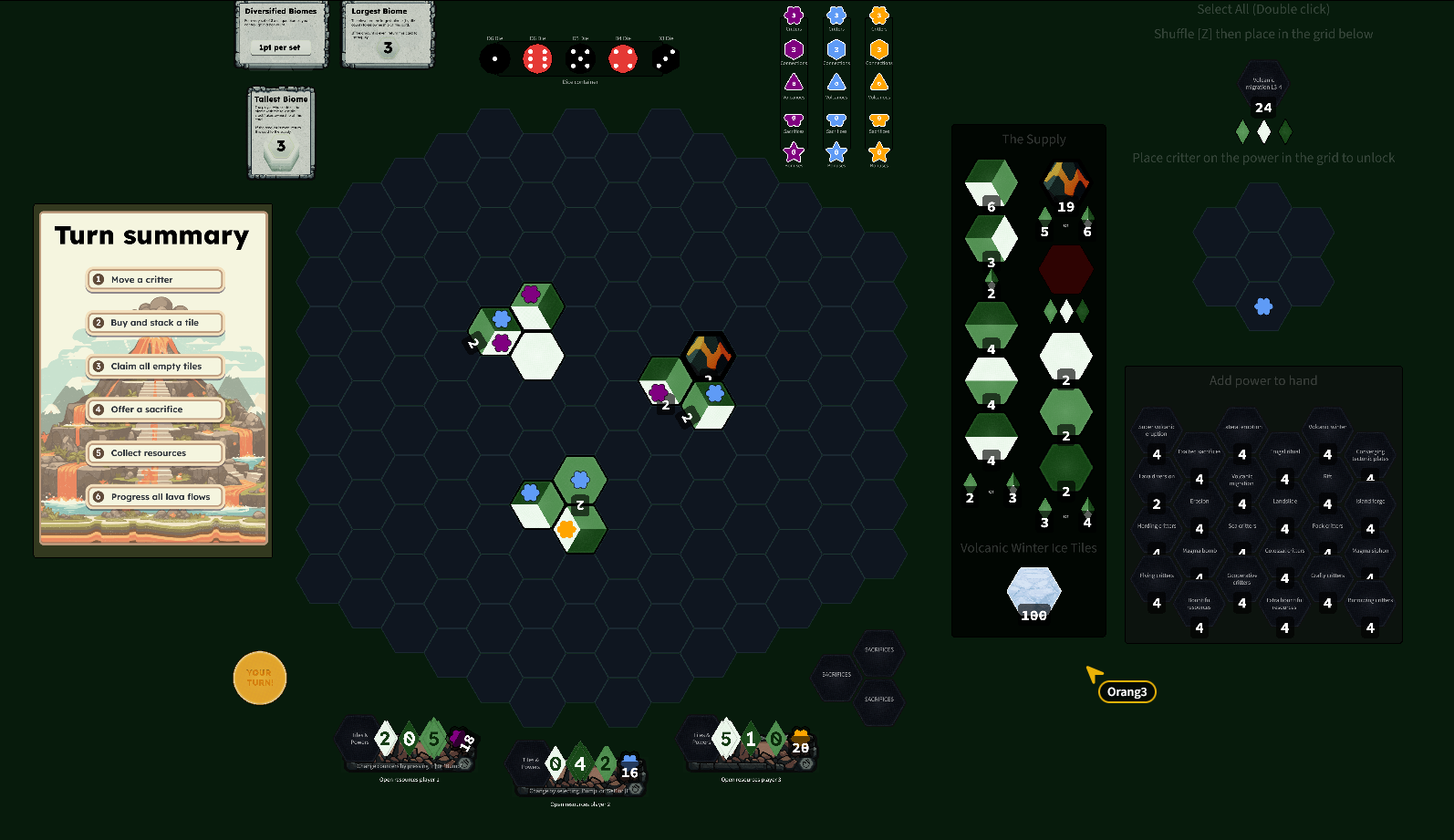
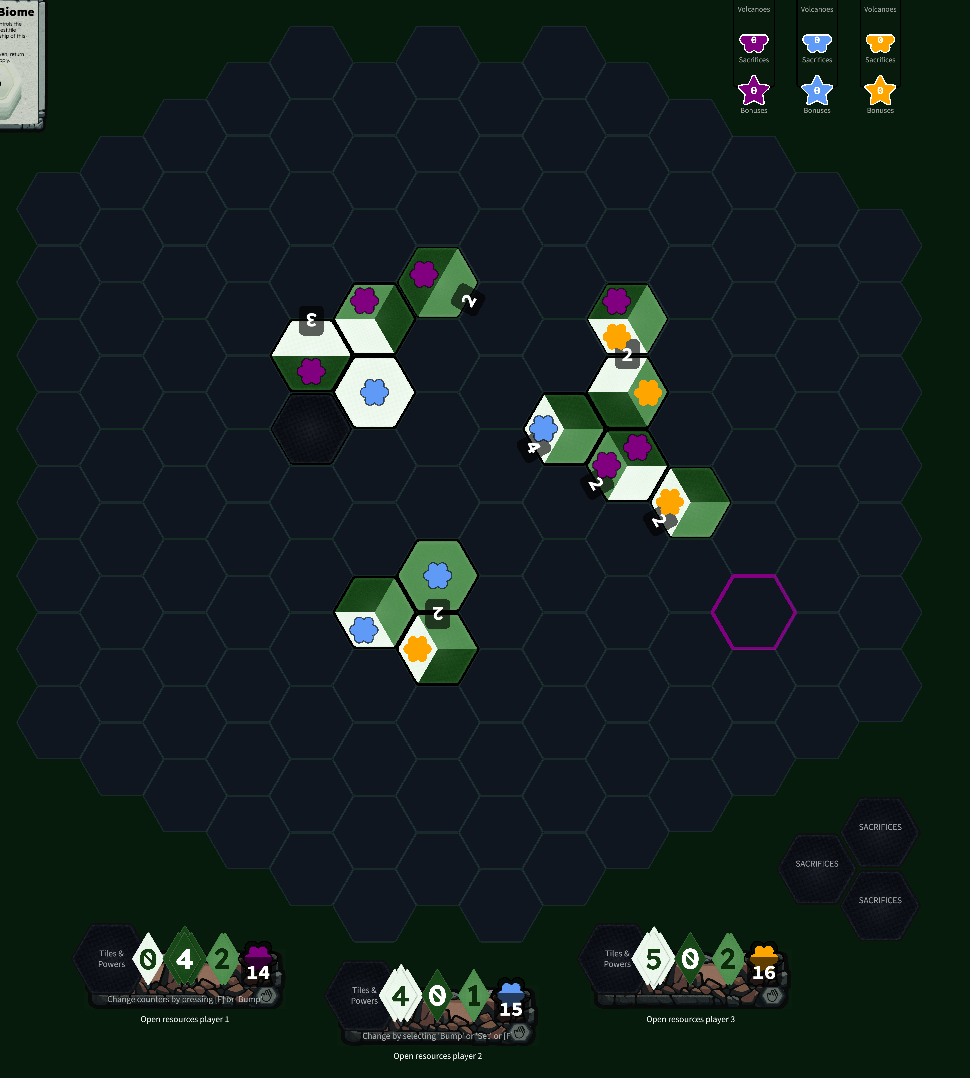
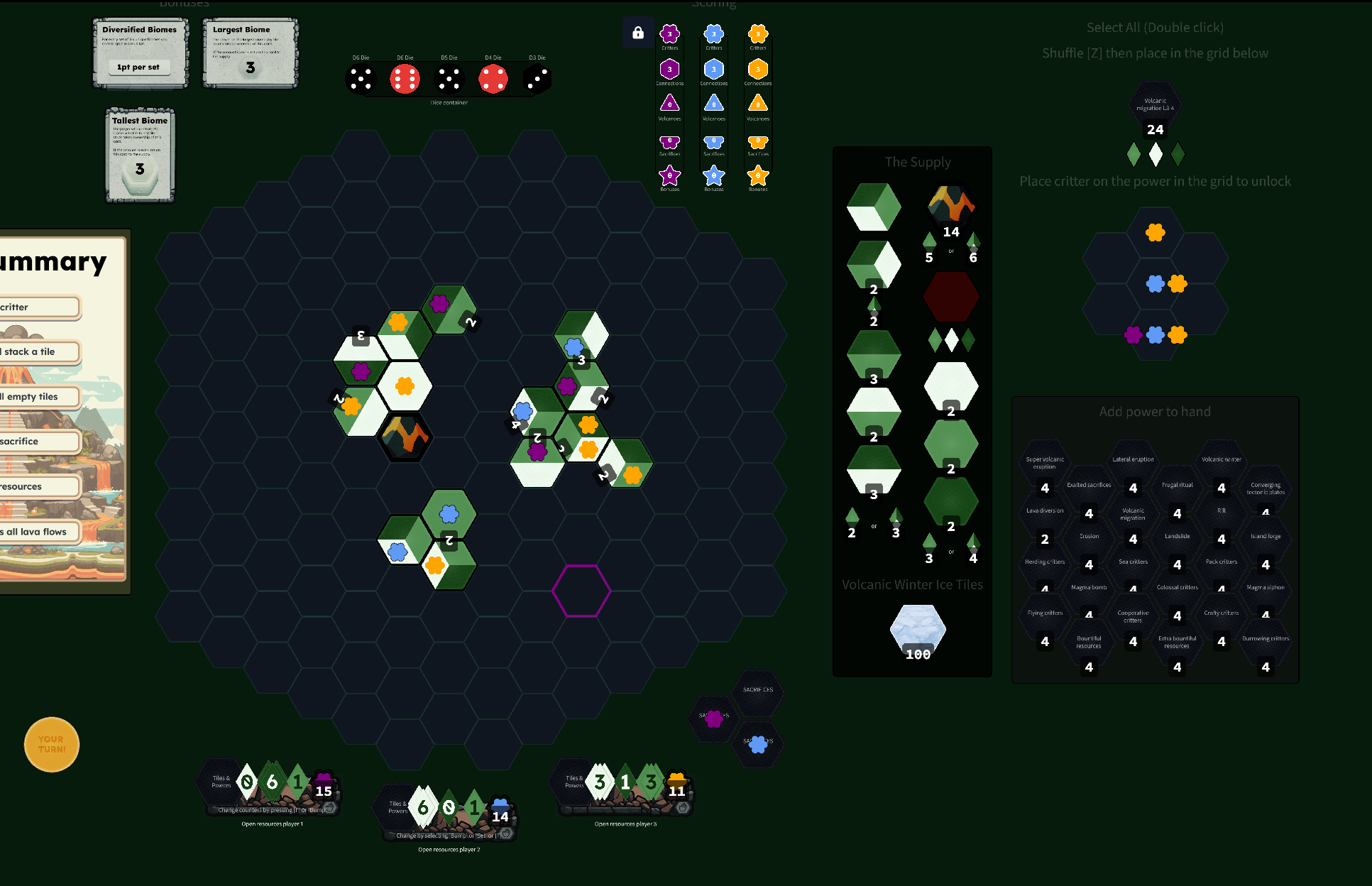
Start Round 3

Starting round 3, Purple is ready to gain both the benefit of the volcanic soil and can set of their own volcano, Blue can also trigger another volcano to keep pushing the rush

Purple buys a trio and plays their volcano, every player has now triggered 1 volcano. The board is interesting. Does blue go defensive or all in with the rush?

Blue goes all in on the volcano rush, but only collects 3 resources

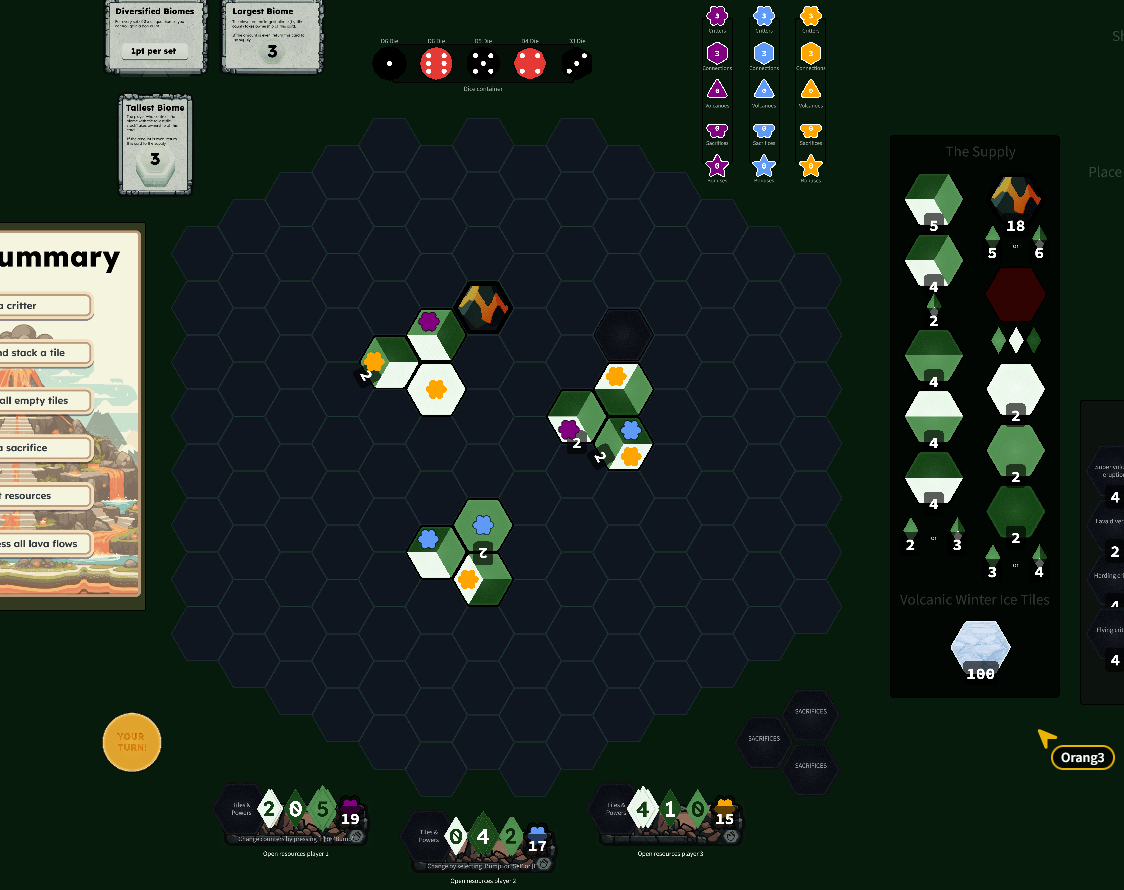
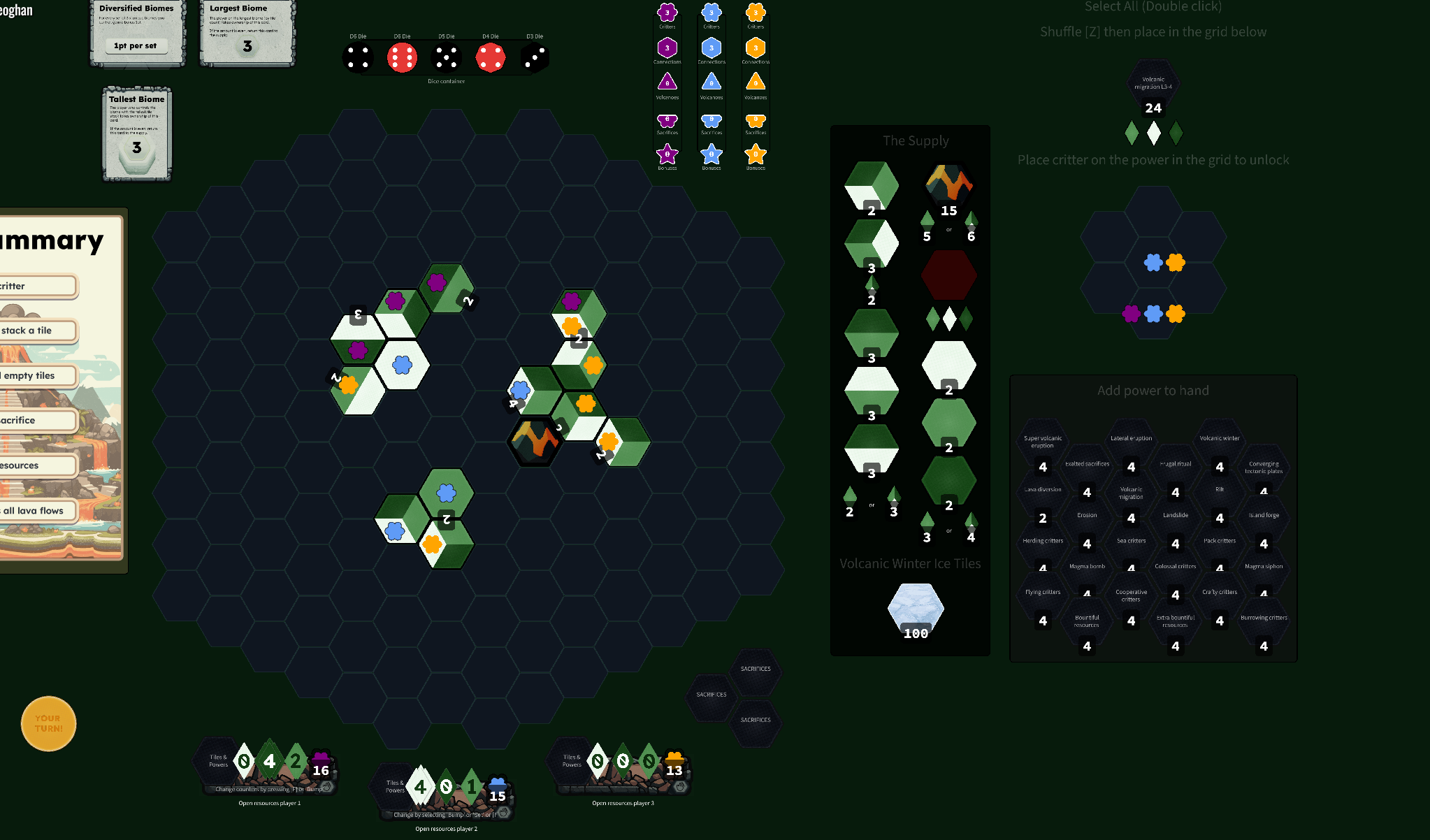
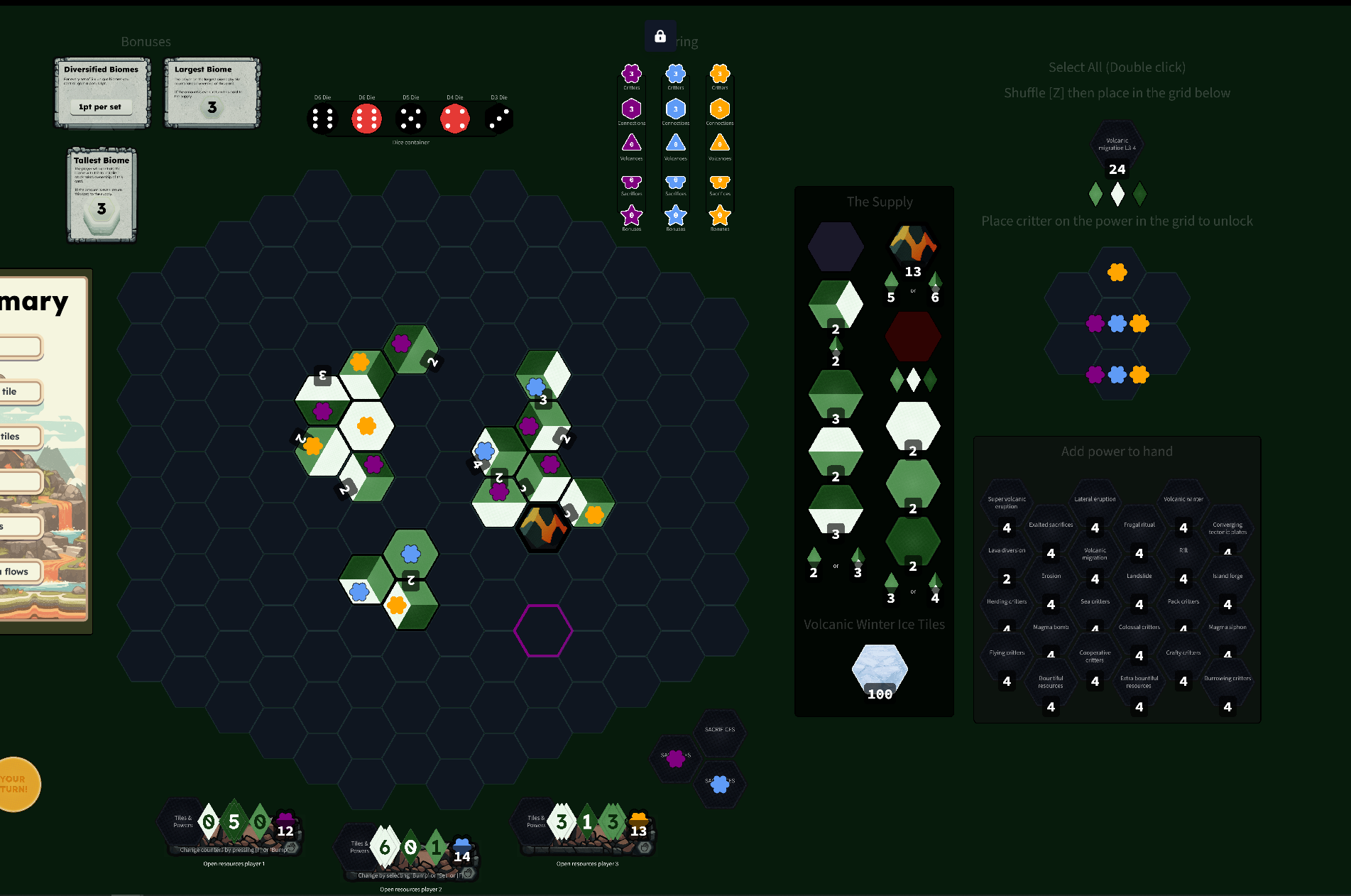
Start Round 4

Orange prepped for the soil + volcano combo

Purple bolsters to 6 critters, unable to get the 5 of a kind for the volcano + soil but has enough for a volcano

Blue decides to only focus on removing an opponent critter and go all in for light resources, makes a very obvious target for Orange and sneakily will hold tallest biome and largest biome

Orange plays the soil and the obvious 2 critter tile Purple had control of. Orange is now the obvious Target

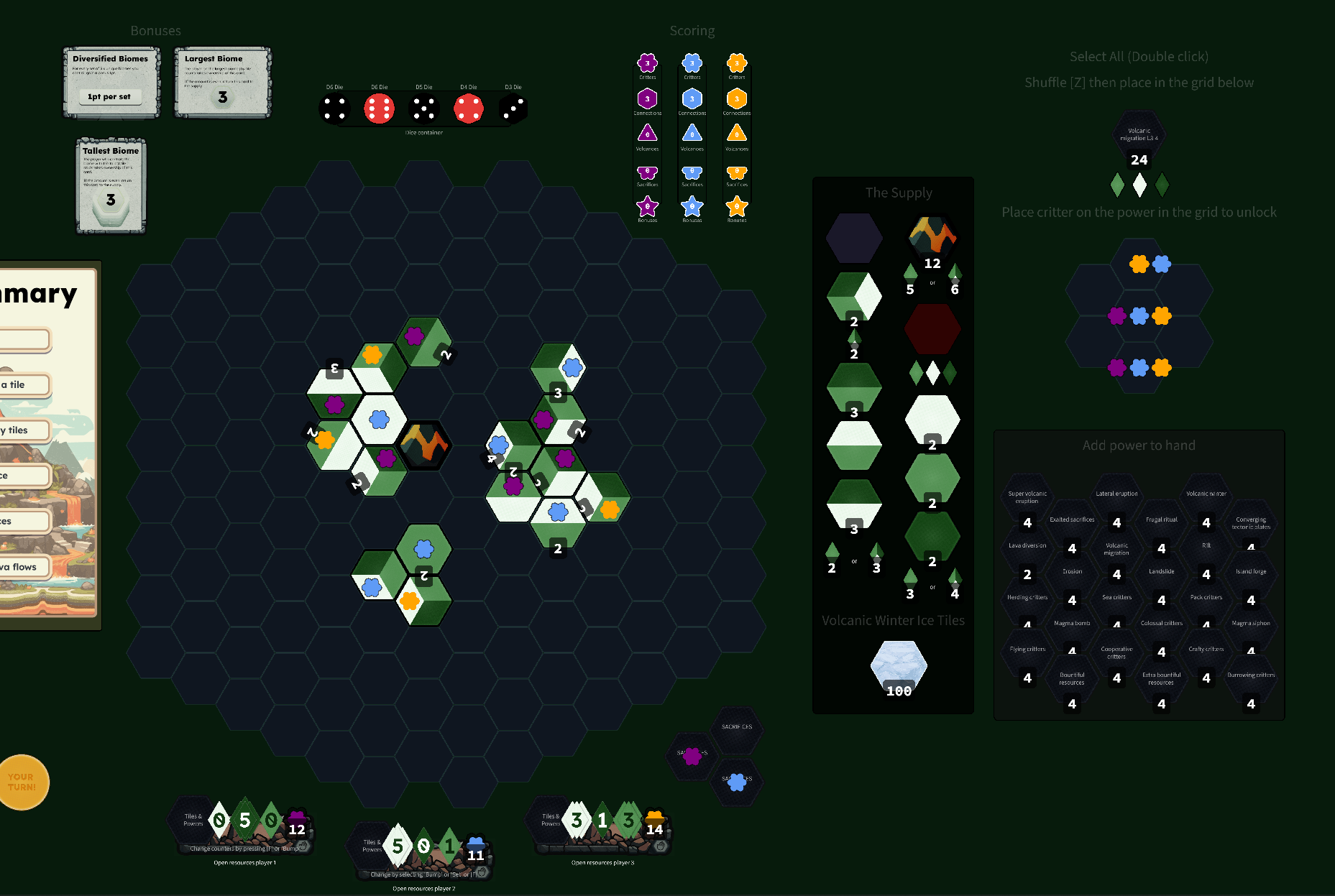
Start Round 5

Purple takes the soil, splits up Orange and makes a sacrific

Orange’s more stable resource collection led them to trigger the first volcano 3

Start Round 6

Round 6
Round 6
Blue unlocks their L5 volcano
Orange triggers the super volcano to try and win with a rush, one round left!

Round 7

The supervolcano erupts, greatly displacing Purple, they had managed to sacrifice 1 (I forgot to screenshot the final moves from everyone)

Purple played a scorched earth tactic, trying to take Blue down with them but it was too little too late.

Final scores Purple: 9 Blue: 16 Orange: 13

Loss aversion

I have been revisiting game theory on loss aversion. One contentious note that has come up a few times were the starting islands.

“Things that people own gain more value in their eyes. Personalizing or anthropomorphizing enhances this effect.” - Geoffrey Englestein

People have often mentioned that the islands they start on feels like ’theirs’, making them more likely to try and defend it rather than going after everyone else. Is this a bad thing? For this game, when the playstyle is symbiosis, yes. I believe thematically it makes more sense for the islands to start with an even(ish) spread of numbers.

However, this does create a fundamental flaw, if I’m not careful, a volcano could be triggered in turn 1. That doesn’t feel like the player ’earned’ it. Turn 2 works but you have to get it exactly right and not have another player intentionally sabotaging it.

That being said, the volcanoes are critical for the game to have the variance so I do want them popping out early.

It may be as simple reducing it to 1 bonus resource or an alternating rotation at the start to ensure no one ends up with 5 of a kind.

5 is absolutely the logical threshold of the anyone can attack. As they could otherwise always go for a volcano each turn.

More thoughts and testing inbound…

But on second thoughts - A Game Designer’s week later comment

Remembering the ol’ adage of ’every new player will play your game once’. Very few will play it a second time, let alone a third or one hundredth.

Why not reward a player who has the foresight to go all in on 5 of a kind on turn one. Many mightn’t think to do it, in a competitive group many will go for it, potentially to the point of blocking each other from cracking the 5 (on the three-times-around, biome selecting moves).

Another note on speed - listening to this Podcast from the Board Game Design Lab interview with Elizabeth Hargrave (creator of Wingspan)

https://www.youtube.com/watch?v=IQlnE_1CMko&t=1742s

They intentionally left the game finishing early, so players would be more likely to want more and have another playthrough.

Whilst we very quickly introduced the ‘1 extra cube’ house rule for Wingspan, as every we’ve played with likes to see their ’engines’ properly firing. It is an interesting way to entice player’s for that second shot at your game.

Licensed under CC BY-NC-SA 4.0
Last updated on Nov 01, 2025 00:00 AEST

Lava your comments here

Loading comments...

I acknowledge the Wurundjeri Woi-wurrung people as the Traditional Owners of the lands and waterways on which this idea was brought to life, and pay my respect to the wisdom of their Elders past and present.

A boardgame designed by Alex Barnes-Keoghan
Built with Hugo, Theme Stack designed by Jimmy
Parallax stars effect by Sarazond, hexagonal background by Temani Afif
GAME TESTED BY// Ruby Benjy Amy Toby Hugh Liam Kumal Ben Sam Huon Jonathan The Melbourne Incubator Sonya Joseph Daarsya Jess Ryan and many more